TABLE OF CONTENTS
The modular EV skateboard has become the foundation of modern electric vehicle development. But not all skateboard platforms are created equal. Some require extensive assembly and integration work. Others arrive as complete, ready-to-drive systems. Understanding the difference is critical before committing to a platform for your project.
What Is a Modular EV Skateboard?
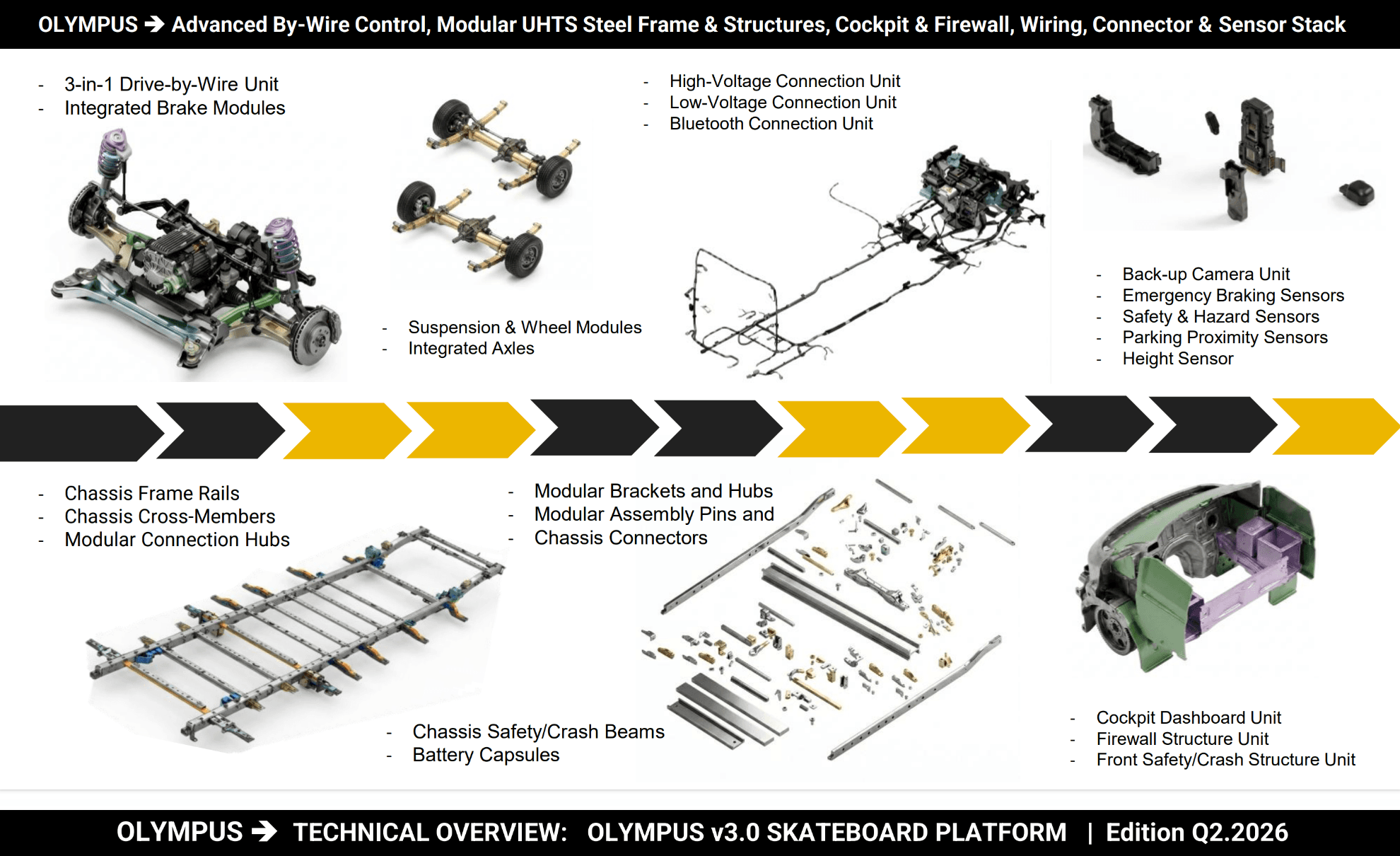
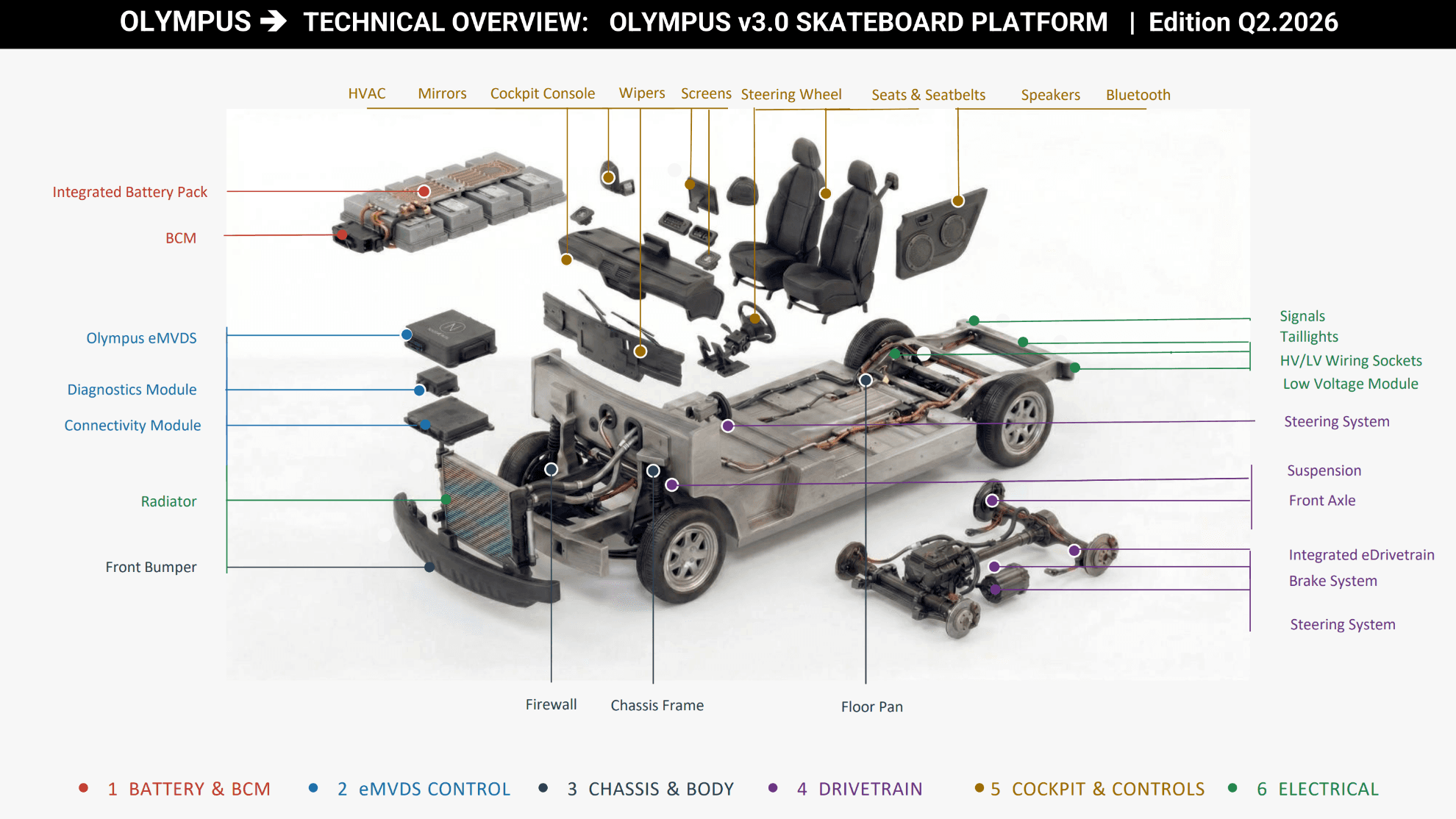
A modular EV skateboard is an electric vehicle platform built from interchangeable components. The chassis, battery pack, motor, suspension, and control systems are designed as separate modules that can be configured, upgraded, or replaced independently. This architecture allows builders to customize the platform for different applications without redesigning the entire vehicle.
The term skateboard comes from the flat, rectangular shape of these platforms. Batteries spread across the floor. Motors mount at one or both axles. Suspension and wheels attach at the corners. The result looks like an oversized skateboard, and like a skateboard, different decks or bodies can mount on top.
CORE MODULES
Chassis Frame
The structural backbone that everything bolts to
Battery Module
Scalable energy storage from 42 kWh to 72 kWh
Drive Unit
Motor, inverter, and reduction gear as a single assembly
Control Module
Vehicle computer, sensors, and software
Ready-to-Drive Platforms Explained
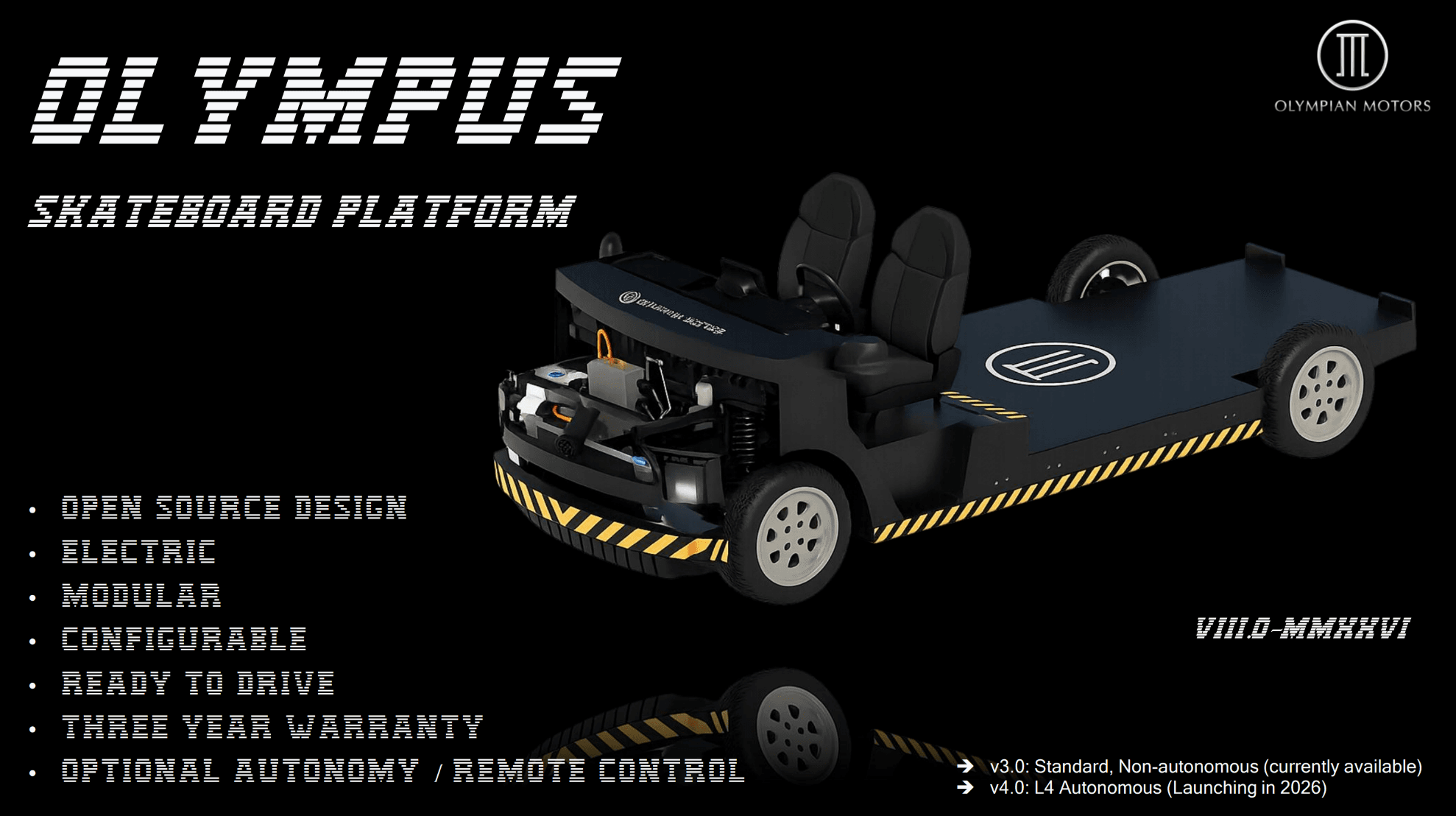
A ready-to-drive EV skateboard takes the modular concept further. Instead of shipping separate components for assembly, the platform arrives as a complete, functional vehicle. You can literally drive it off the delivery truck. All systems are installed, tested, calibrated, and validated before delivery.
A true ready-to-drive platform is not a kit. It is a complete vehicle minus the body. The battery pack is installed and charged. The motor and drivetrain are connected and calibrated. Cooling systems are filled and bled. The vehicle computer is programmed and tested. Steering, brakes, and suspension are aligned and adjusted. You receive a platform that drives, steers, and stops on day one.
Key Differences
Advantages of Modular Design
Modular architecture provides flexibility that fixed designs cannot match. Each module can be upgraded independently as technology improves. Battery capacity can increase without changing the chassis. Motors can be swapped for more powerful units. This future-proofing extends the useful life of the platform significantly.
Scalability
The same modular platform can serve multiple applications. A delivery company might use smaller batteries for urban routes and larger batteries for highway corridors.
Repair & Maintenance
When something fails, you replace the affected module rather than diagnosing individual components. This approach reduces downtime and simplifies technician training.
Advantages of Ready-to-Drive
Ready-to-drive platforms eliminate the most difficult and risky part of EV building: integrating the powertrain. High voltage systems require specialized knowledge. Battery management calibration affects safety and longevity. Motor controller tuning impacts performance and efficiency. Having these systems pre-integrated and tested removes significant technical barriers.
Which One Is Right for You?
CHOOSE MODULAR KIT WHEN
- >>You have experienced EV integration engineers on staff
- >>Your application requires non-standard configurations
- >>Budget is more constrained than timeline
- >>You want maximum control over every system
CHOOSE READY-TO-DRIVE WHEN
- >>Speed to market is critical
- >>Your team focuses on body design, not powertrain
- >>You want guaranteed performance specifications
- >>You plan to scale production after proving the concept
The Olympus Solution: Modular and Ready-to-Drive
The Olympus Kit delivers both advantages. It arrives as a ready-to-drive platform with full modular architecture. You get immediate functionality with the flexibility to customize, upgrade, and modify over time. This combination eliminates the traditional trade-off between integration risk and long-term flexibility.
174 HP
Continuous Power
42-72
kWh Options
155-255
Miles Range
121
MPH Top Speed
Frequently Asked Questions
Can I upgrade a ready-to-drive platform later?+
What body styles work with the modular skateboard?+
How long does body integration take?+
Is the platform suitable for autonomous vehicles?+
What is the difference between EV skateboard and EV chassis?+
Ready to Build on the Modular EV Skateboard?
Get a ready-to-drive platform with full modular flexibility. Configure your Olympus Kit and start your electric vehicle project today.
CONFIGURE YOUR PLATFORM >>>